

How can artists and designers rethink our relationship with plastic? Can we move beyond the idea of waste and towards seeing discarded material as a resource for creative practice?
In 2023, we partnered with Future Makers, a Nottingham-based creative studio specialising in plastic recycling, to explore these questions through an eight-week Product Design Accelerator for local artists, designers and makers.
The programme grew out of our ongoing work to support creative experimentation with waste plastic, and was inspired by the approach we developed through Know How, our programme helping cultural organisations across the East Midlands place digital and design thinking at the heart of their work.
Rather than simply transferring the original Know How programme to a new context, we adapted its principles and methods around a very different challenge: how might artists and designers develop viable products and creative practices using recycled and repurposed waste plastic?
From Know How to Accelerator
Know How was built around a simple idea: give creative organisations the confidence, tools and support to move from an initial idea towards something they could test in the real world.
The original programme used a six-stage process: Think, Develop, Play, Test, Build and Launch, to explore design thinking, prototyping, business development and audience insight. Twenty-four cultural businesses took part, with opportunities to work with technologists and develop prototypes.
For the Product Design Accelerator, we took the design-led approach of Know How and reshaped it around material experimentation.
Working with Future Makers and Sustainable Design Studio's Rory Dickens, we created a programme that combined practical exploration of recycled plastic with product development, business thinking and prototyping. The majority of the sessions took place at Broadway, with participants also gaining access to Future Makers' specialist Waste Plastic Studio.
The aim wasn't to teach participants how to make a particular product. Instead, it was to help them understand the material, identify opportunities within their own practices and develop ideas that could ultimately become viable products or creative ventures.
Changing perceptions of plastic
Starting with the Think stage of Know How, we began by asking participants to examine their own perceptions of plastic. This led to defining a business challenge and reconsidering the assumptions that shape how we approach a material.
For many creatives, plastic is a material they actively try to avoid because of its environmental impact. But recycled plastic also has a different story to tell: it can be durable, versatile, colourful and capable of being repeatedly transformed.
Understanding those contradictions was an important starting point.
Participants explored different types of plastic, their properties and potential applications, while beginning to think about how material choice, sustainability and design could work together.
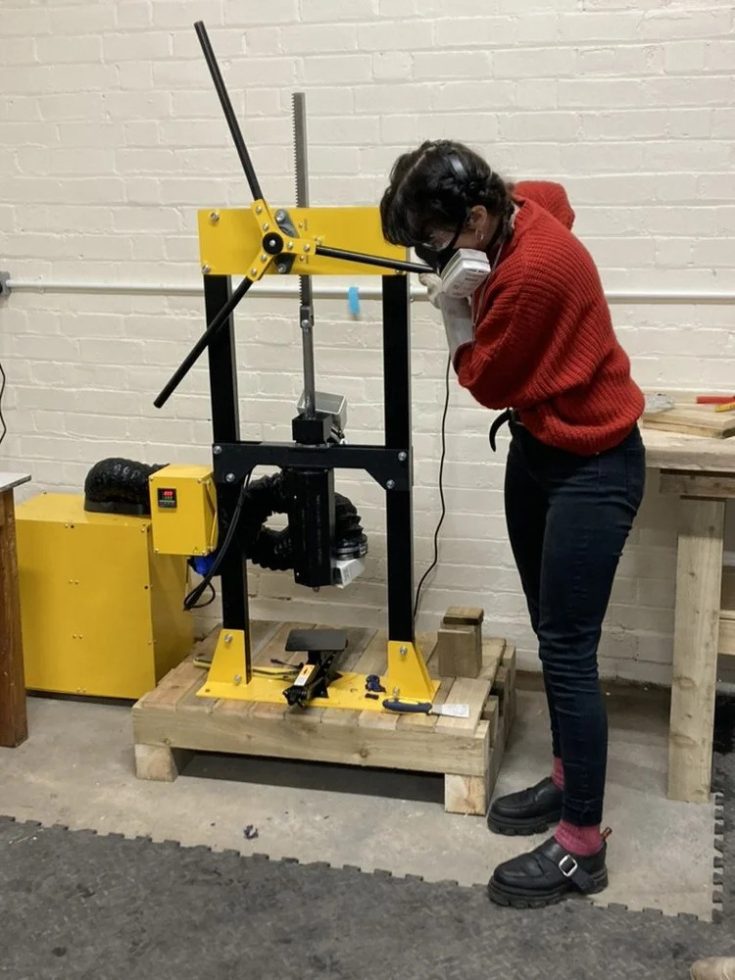
Artist Katharina Fitz at Future Makers' studio.
From material exploration to ideas
As the programme developed, participants moved from understanding the material to imagining what they could do with it.
Ideas were explored through practical exercises, discussion and experimentation, with participants considering questions around users, markets, production methods and the role of recycled plastic within their own creative practices.
This reflected the Develop and Play stages of Know How: generating possibilities, challenging assumptions and testing ideas before committing significant time or resources.
The process also exposed an important reality of working with recycled materials. Designing something is only part of the challenge. The availability, type and consistency of waste plastic can all influence what is possible.
Rather than treating these constraints as barriers, the programme encouraged participants to use them as part of the design process.
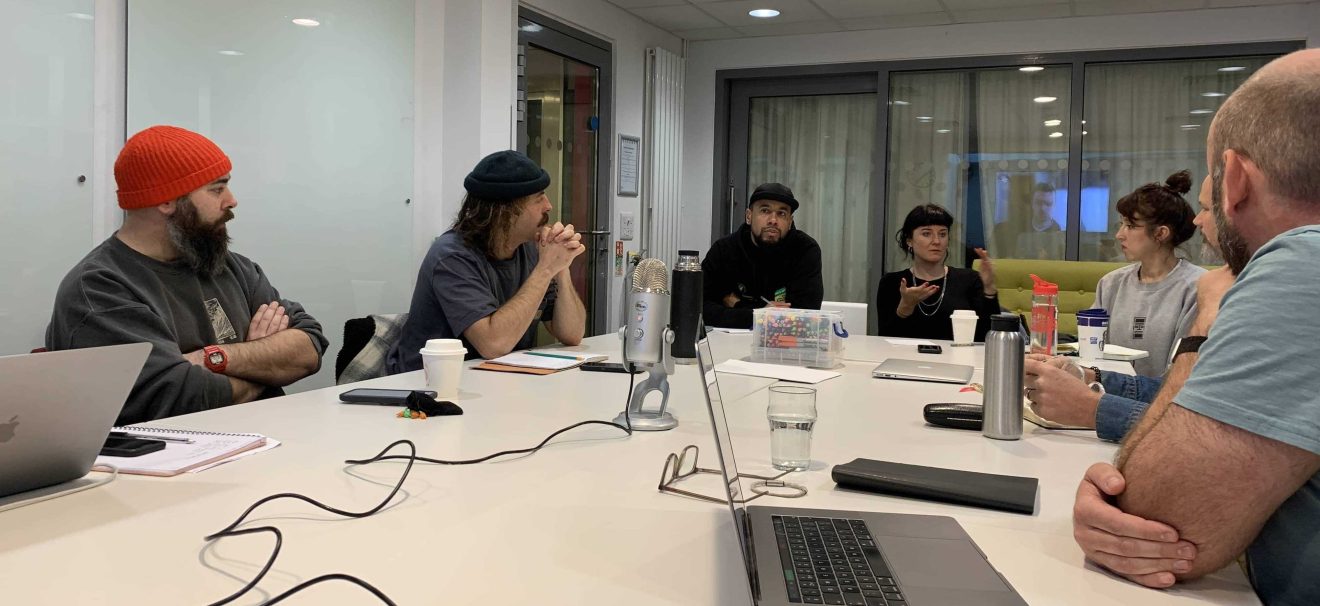
The accelerator cohort.
Making ideas tangible
The accelerator then moved into more technical territory.
Rory Dickens introduced participants to 3D design software Fusion 360 and demonstrated how digital modelling could be used to develop moulds for product manufacture. This gave participants an insight into the relationship between an initial concept, its digital representation and the practical requirements of making it.
For participants with previous 3D software experience, this provided an opportunity to develop their skills further. For others, it highlighted the value of collaborating with technical specialists who can help translate a creative idea into a manufacturable object.
This was the Build principle of Know How in action: bringing together the right skills and resources to move an idea towards a working prototype.
Testing the opportunity
Alongside material and technical development, we wanted participants to think seriously about the viability of their ideas.
Sessions explored business models, production costs, mould expenses, pricing and potential routes to market. Participants were encouraged to consider not only what could be made, but who might want it, why they would buy it and whether it could be produced sustainably.
The programme culminated in a public keynote and final pitch event at Broadway, where participants presented their ideas and received feedback from potential customers and stakeholders.
This brought the Test and Launch principles of Know How into the programme: taking ideas outside the studio and exposing them to real-world responses.
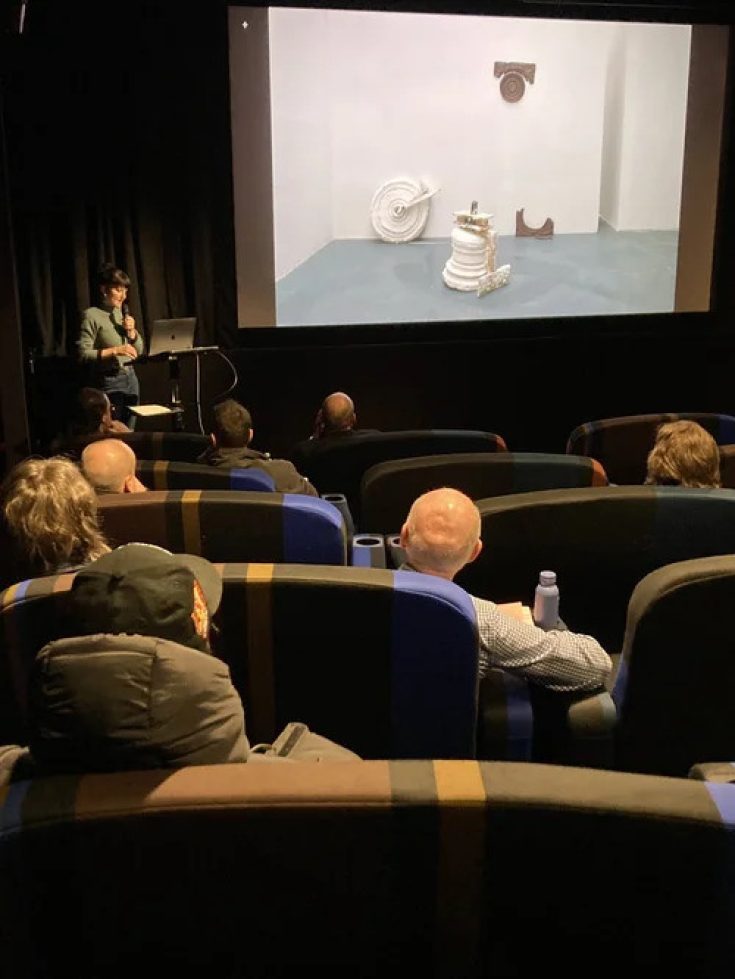
Sharing outcomes and pitching new products and artworks. Pictured: Katharina Fitz.
From ideas to prototypes
By the end of the accelerator, three participants had progressed their concepts to prototype stage.
They were able to pitch their ideas, gather feedback and begin refining their designs in response to potential users and stakeholders. The next stage was to explore investment in moulds and production, with Future Makers subsequently commissioned to develop a limited product line.
For us, the value of the programme wasn't simply measured by the products created during the eight weeks. It was about building the confidence and capability to continue experimenting.
Participants left with a better understanding of recycled plastic as a creative material, alongside practical experience of product development, prototyping, pricing and testing.
Extending the Know How approach
The Accelerator programme demonstrated how a methodology originally developed for digital transformation could be adapted to support innovation in a completely different area.
At its heart, both programmes share the same approach: start with a challenge, explore possibilities, test assumptions, make something, learn from it and use that learning to decide what happens next.
For Near Now, the project was an opportunity to extend the legacy of Know How beyond digital technology and into material innovation, sustainability and creative practice.
It also became part of our wider collaboration with Future Makers to explore how waste plastic could become a resource for artists, designers and makers. That collaboration has continued through projects including the Near Now Fellowship and Katharina Fitz's Ripple — a public sculpture at Broadway made from repurposed waste plastic sourced from the venue.
The accelerator showed that the principles behind Know How remain useful wherever creative people are trying to turn new ideas into something real. The framework adapts to changing materials, technologies and challenges.
Creating the space, tools and confidence to experiment remains at the heart of what we do at Near Now.
Want to discuss using Know How to explore a new creative challenge?
Get in touch.